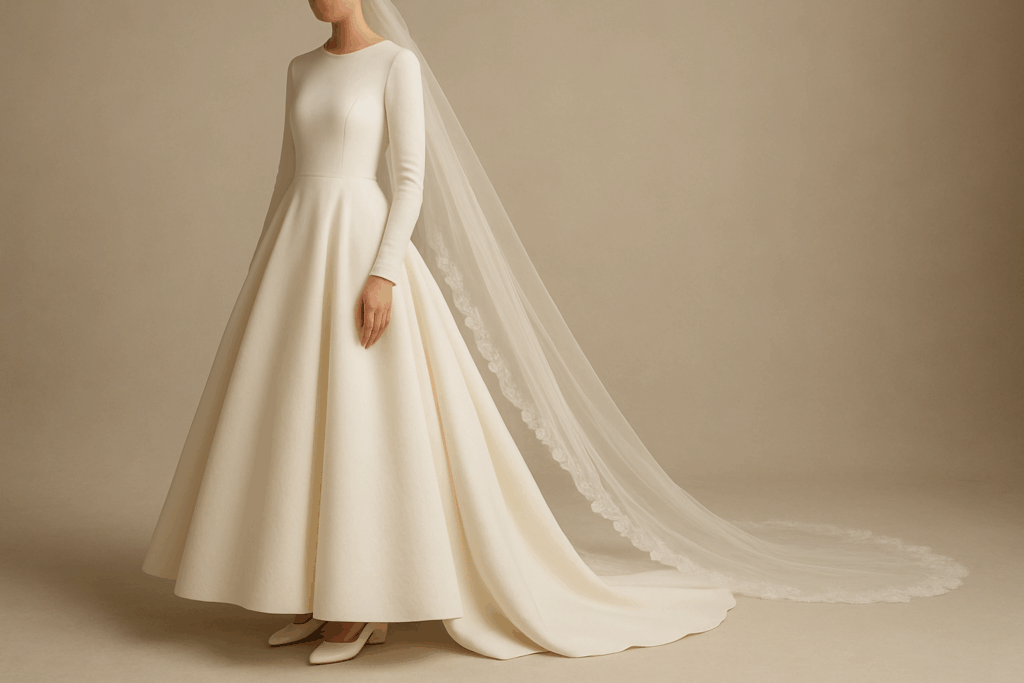
The verified Olivia Culpo wedding dress facts are specific and fairly restrained: she married Christian McCaffrey on June 29 in Watch Hill, Rhode Island, wearing a Dolce & Gabbana long-sleeve crepe crew-neck ball gown with a voluminous skirt, a button-lined back, and a 16-foot lace veil. The useful lesson for 2026 brides is not “copy this exactly.” It is that a strong bridal look gets clearer when you decide the level of coverage, silhouette, fabric mood, and styling restraint before you start adding details.
What is actually confirmed about the Olivia Culpo wedding dress
The core details are consistent across Vogue’s reporting. Culpo’s ceremony gown was designed by Dolce & Gabbana, and the silhouette was formal rather than embellished-for-the-sake-of-it. The dress was described as a long-sleeve crepe crew-neck ball gown with a voluminous skirt and a back lined with buttons. She wore it with a 16-foot lace veil.
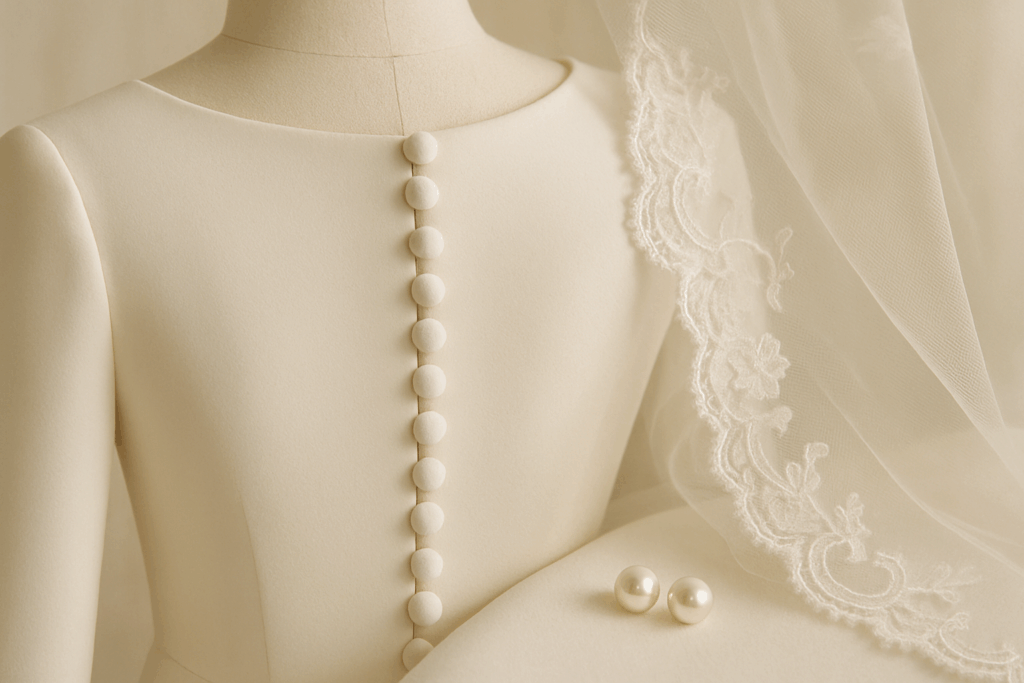
Her stated brief matters because it explains why the dress looked the way it did. She wanted the gown to feel serious, timeless, covered, elegant, and not overtly sexy. Vogue also reported that the church ceremony was a priority, and that preference shaped the higher neckline, longer sleeves, and more formal line of the gown.
One more useful factual point: Vogue’s wedding roundup notes that she wore three different Dolce & Gabbana dresses across the day. So the ceremony gown was only one part of the full wedding wardrobe, even if it is the look most readers remember.
Olivia Culpo married Christian McCaffrey on June 29 in Watch Hill, Rhode Island wearing a Dolce & Gabbana long-sleeve crepe crew-neck ball gown with a voluminous skirt, button-lined back, and a 16-foot lace veil. The Story Behind Olivia Culpo’s Traditional Dolce & Gabbana Ballgown for Her Rhode Island Wedding | Vogue.
Culpo said she wanted the dress to feel serious, timeless, covered, elegant, and not overtly sexy, and Vogue reported that the church ceremony shaped the formal design direction. The Story Behind Olivia Culpo’s Traditional Dolce & Gabbana Ballgown for Her Rhode Island Wedding | Vogue.
- Designer: Dolce & Gabbana
- Ceremony date reported by Vogue: June 29
- Location reported by Vogue: Watch Hill, Rhode Island
- Ceremony gown: long sleeves, crew neck, crepe fabrication, ball gown volume, button-lined back
- Veil: 16-foot lace veil
- Wedding-day wardrobe overall: three Dolce & Gabbana dresses
What is not verified, and why that matters
The coverage does not verify lace or beading on the gown itself, so those details should not be repeated as fact. What is clearly described is crepe for the dress and lace for the veil. If you are saving inspiration images from reposts or social clips, treat anything beyond those published garment details as unconfirmed.
The reporting does mention a dropped waist in the design process, used to create a longer torso effect. That is useful because it shifts the conversation from celebrity worship to construction choices. If you like the dress, the real takeaway is proportion: high neckline, long sleeves, controlled volume, and a waist placement that lengthens the body.
It is also worth separating her personal values from universal bridal rules. Culpo’s preference for coverage and restraint made sense for her ceremony and taste. That does not make a minimalist ball gown the correct answer for every bride.
Vogue reported that Culpo and Dolce & Gabbana developed a formal vision with long sleeves, a crew neck, and a dropped waist to create an elongated torso effect. The Story Behind Olivia Culpo’s Traditional Dolce & Gabbana Ballgown for Her Rhode Island Wedding | Vogue.
Vogue’s coverage identifies the ceremony gown as crepe and the veil as lace, but does not add further verified embellishment details for the gown itself. The Story Behind Olivia Culpo’s Traditional Dolce & Gabbana Ballgown for Her Rhode Island Wedding | Vogue.
- Verified: crepe gown, long sleeves, crew neck, voluminous skirt, button-lined back, lace veil
- Verified from the design process: dropped waist was part of the concept
- Not verified in the supplied reporting: gown beading, corsetry, exposed back, decorative lace on the dress itself
How to translate the look into a smart bridal decision
If you respond to the Olivia Culpo wedding dress, the strongest part to borrow is the discipline. Pick one clear message for the ceremony look and let every decision support it. For example, if your message is formal and composed, a matte fabric, covered neckline, and limited jewelry will usually communicate that better than adding sparkle, a dramatic shoe, and heavy glam all at once.
This is where general bridal styling advice becomes useful. Vogue’s bridal styling guidance recommends choosing a consistent theme, dressing like yourself, avoiding overworked hair and makeup, checking fabric quality, and treating accessories as part of the outfit instead of an afterthought. Those are decisions, not trends, and they age better in photos.
In practice, that means deciding early whether your statement piece is the silhouette, the veil, or the accessories. If the gown is architectural and modest, keep jewelry compact. If the dress is simpler and lighter, you can let the veil or earrings carry more presence. The common mistake is trying to make every element memorable at the same time.
Vogue’s bridal styling advice emphasizes picking a consistent theme, dressing for yourself, avoiding overdone hair and makeup, checking fabric quality, and considering accessories carefully. 10 Mistakes Brides Typically Make When It Comes to Styling and How to Avoid Them | Vogue.
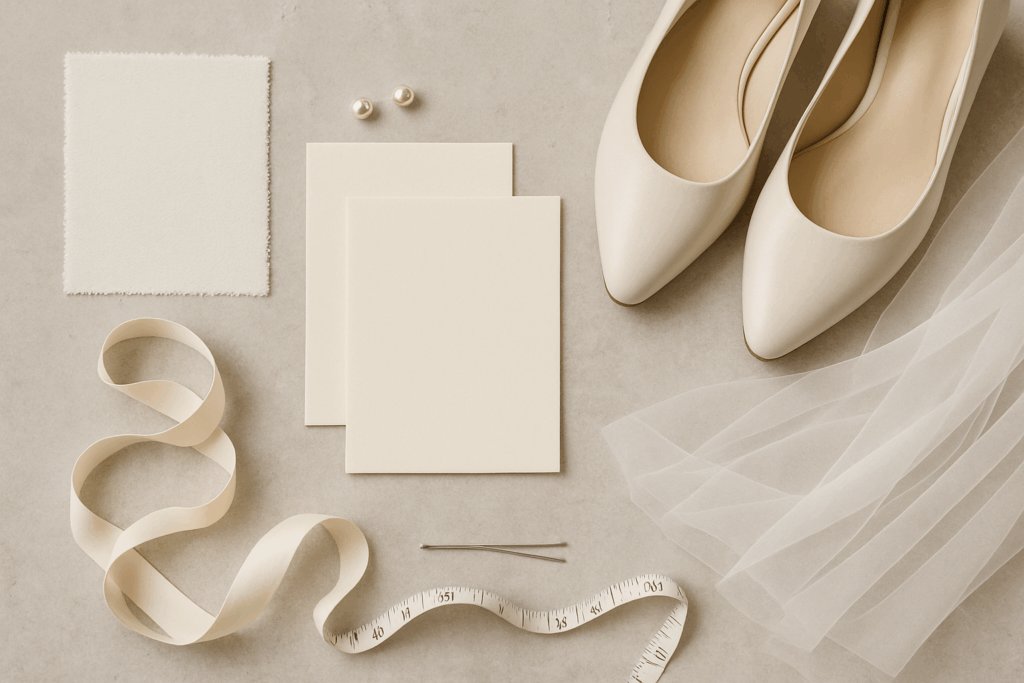
- Start with the ceremony setting before you choose neckline or sleeve length
- Choose one dominant visual idea: coverage, volume, veil drama, or jewelry
- Use fabric finish to set the mood: matte reads quieter than shine
- Keep hair and makeup aligned with the dress rather than competing with it
A realistic way to use this for a 2026 wedding
For a bride planning now, Culpo’s gown is most helpful as a reference for editing. It proves that a bridal look can feel intentional without visible excess. But it only works if the rest of the styling stays coherent. A clean gown with stiff curls, overly shimmery makeup, and unrelated statement accessories stops reading timeless and starts reading split-direction.
If you love the idea but need more ease, adjust the silhouette before you adjust the concept. You might swap the full ball gown for an A-line or column shape while keeping the same logic: clean fabric, controlled neckline, long line, restrained jewelry, and one soft focal point such as a veil or button back. That keeps the spirit of the look without turning your fitting into a costume exercise.
Vogue’s wedding coverage also notes that Culpo’s reception aesthetic leaned toward old-school elegance with lush garden florals, reinforcing that the wedding wardrobe and setting followed a coherent direction. The Best Celebrity Weddings in Vogue | Vogue.
- Borrow the editing, not necessarily the exact silhouette
- Change shape for comfort before adding extra decoration
- Make the back view, hem, and veil relationship part of the fitting plan
Bridal decision checklist inspired by the Olivia Culpo approach
Answer these in order before your next fitting. If one answer clashes with the ceremony setting or with how you actually want to look in photos, revise that choice before adding accessories.
- Name the mood in five words or fewer, such as covered, calm, architectural, soft, or romantic.
- Choose the silhouette first: ball gown, A-line, column, or short dress.
- Decide your coverage points: sleeves, neckline, back, and waist placement.
- Pick one main fabric mood only, such as matte crepe, satin shine, lace texture, or airy tulle.
- Select one statement element only: veil, earrings, back detail, or shoe.
- Plan beauty in the same language as the dress: polished and minimal, soft and undone, or classic and defined.
- Test movement from front, side, and back while walking, sitting, and turning.
- Photograph the full look once with accessories and once without them to see what is doing the real work.
Suggested example: Example: For a formal church ceremony, choose a long-sleeve matte crepe A-line gown with a crew neckline and slightly dropped waist, add one cathedral-length veil, pearl studs, one pair of closed-toe ivory pumps, a low bun, and minimal makeup. If the look already feels complete before a necklace, skip the necklace.
Related guides
Useful if you want a second white look for a rehearsal dinner, civil ceremony, or after-party without losing the same clean direction. The White Dress Styling Notes That Keep It Feeling Urban.
Helpful for deciding whether your bridal jewelry should stay minimal, tonal, and supportive rather than becoming a competing focal point. Styling NYC Jewelry for 2026.